
To provide you with the best possible service, this website uses cookies. By continuing to browse this site, you agree to our use of cookies. Please refer to our [Privacy Policy] for more information. Please note that if you choose to disable cookies, some features of the site may not function properly.
Media Coverage
Botanicure Forum Explores New Botanical Drug Solutions for Dementia
2026-03-29
Dementia is emerging as one of Taiwan's most urgent public health challenges. Among people aged 65 and above, prevalence has reached 7.99%, affecting more than 370,000 individuals today and projected to exceed 700,000 by 2041. Beyond its medical impact, dementia places growing pressure on long-term care systems, family finances, and social resilience.
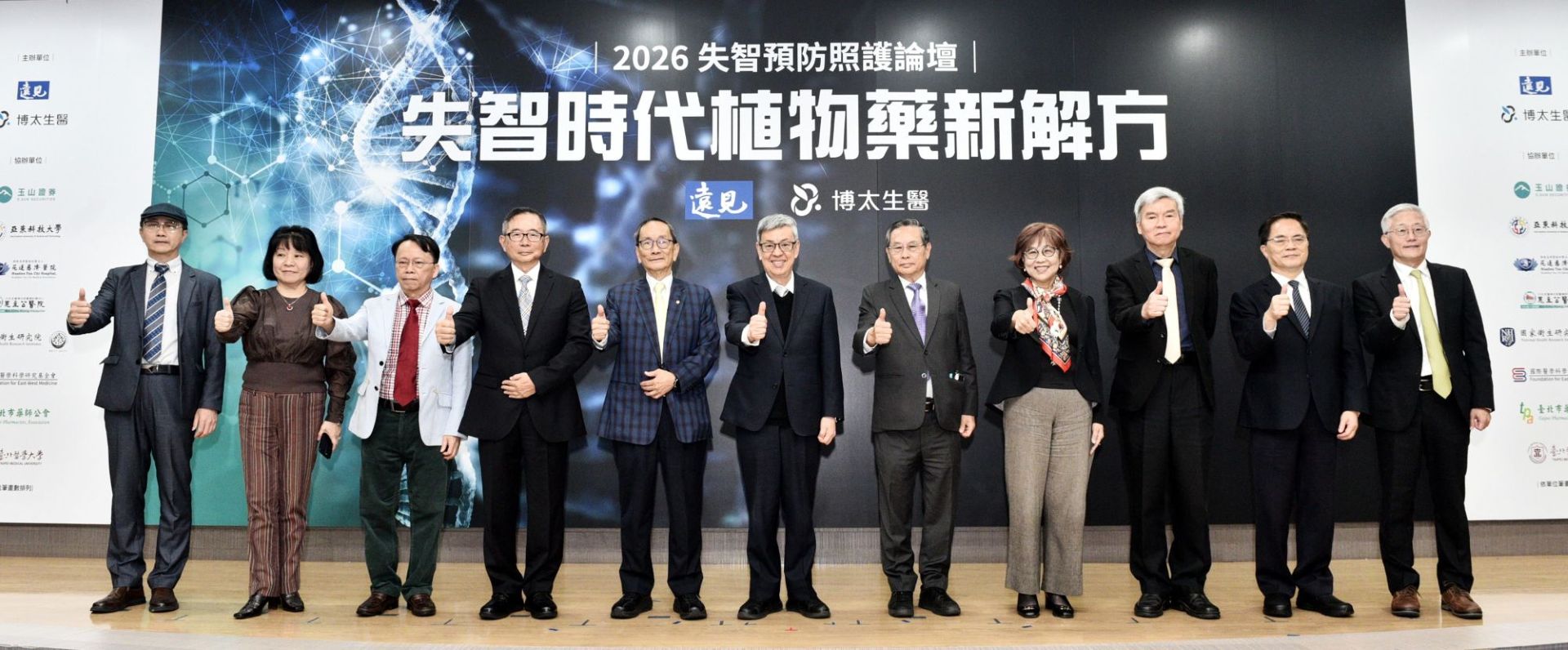
To address this challenge, Botanicure co-hosted the "New Botanical Drug Solutions in the Era of Dementia Forum" together with Global Views Monthly, bringing together leading experts from government, academia, research, healthcare, and industry. The forum explored key developments in dementia prevention, care, and therapeutic innovation, while highlighting the growing potential of botanical drugs as a promising approach to addressing the complex nature of neurodegenerative diseases.
The Growing Societal and Economic Burden of Dementia
Former Vice President and Academician of Academia Sinica, Chen Chien-Jen highlighted the importance of early intervention and biomarker-based diagnosis, emphasizing that prevention remains the most effective approach to reducing the growing burden of dementia.
Huei-Kang Sytwu, President of the National Health Research Institutes (NHRI), noted that the societal and economic impact of dementia extends far beyond direct medical costs, underscoring the need for a comprehensive national dementia care ecosystem.
Advancing Multi-Target Approaches for Dementia
A key focus of the forum was the potential role of botanical drug in addressing the complex and multifactorial nature of neurodegenerative diseases.
Dr. Chi-Yuh Wu, General Manager of Botanicure, shared the company's progress in botanical drug development for Alzheimer's disease and related disorders. He noted that botanical drug may offer advantages through their “multi-component and multi-target mechanisms”, which could complement current therapeutic approaches focused on single biological pathways.
Botanicure's lead dementia program is currently advancing a 300-subject clinical study in Taiwan, designed in alignment with the FDA's guidance for early Alzheimer's disease drug development.
Dr. Chang-Ming Chern, Honorary Vice Superintendent of En Chu Kong Hospital, echoed this perspective, noting that phytochemicals possess multiple pharmacological properties, including anti-inflammatory, antioxidant, and amyloid-beta-clearing effects. Given the complex pathology of Alzheimer's disease, he emphasized that multi-target interventions may offer the best opportunity to modify disease progression.
Academician Andrew H.-J. Wang of Academia Sinica also called for increased government investment in dementia and botanical drug research, while advocating for stronger cross-disciplinary collaboration between agriculture and biomedicine. He noted that such integration could become a key driver of Taiwan's future innovation and industrial development.
Integrating AI, Botanical Science, and Clinical Research
The forum further explored how artificial intelligence (AI) accelerates the discovery and evaluation of botanical compounds. Experts highlighted emerging research demonstrating the potential of AI-assisted screening platforms to identify multi-target therapeutic candidates for neurodegenerative diseases.
Participants also emphasized the importance of strengthening collaboration among healthcare, biotechnology, agriculture, and research sectors to support the development of next-generation botanical medicines.
Building Taiwan's Global Leadership in Botanical Drug Innovation
As part of its long-term strategy, Botanicure continues to invest in botanical drug research and development while expanding capabilities across cultivation, quality management, clinical development, and regulatory compliance.
The company aims to establish internationally aligned medicinal plant cultivation systems based on GACP standards and further strengthen Taiwan's position as a global center for botanical drug innovation.